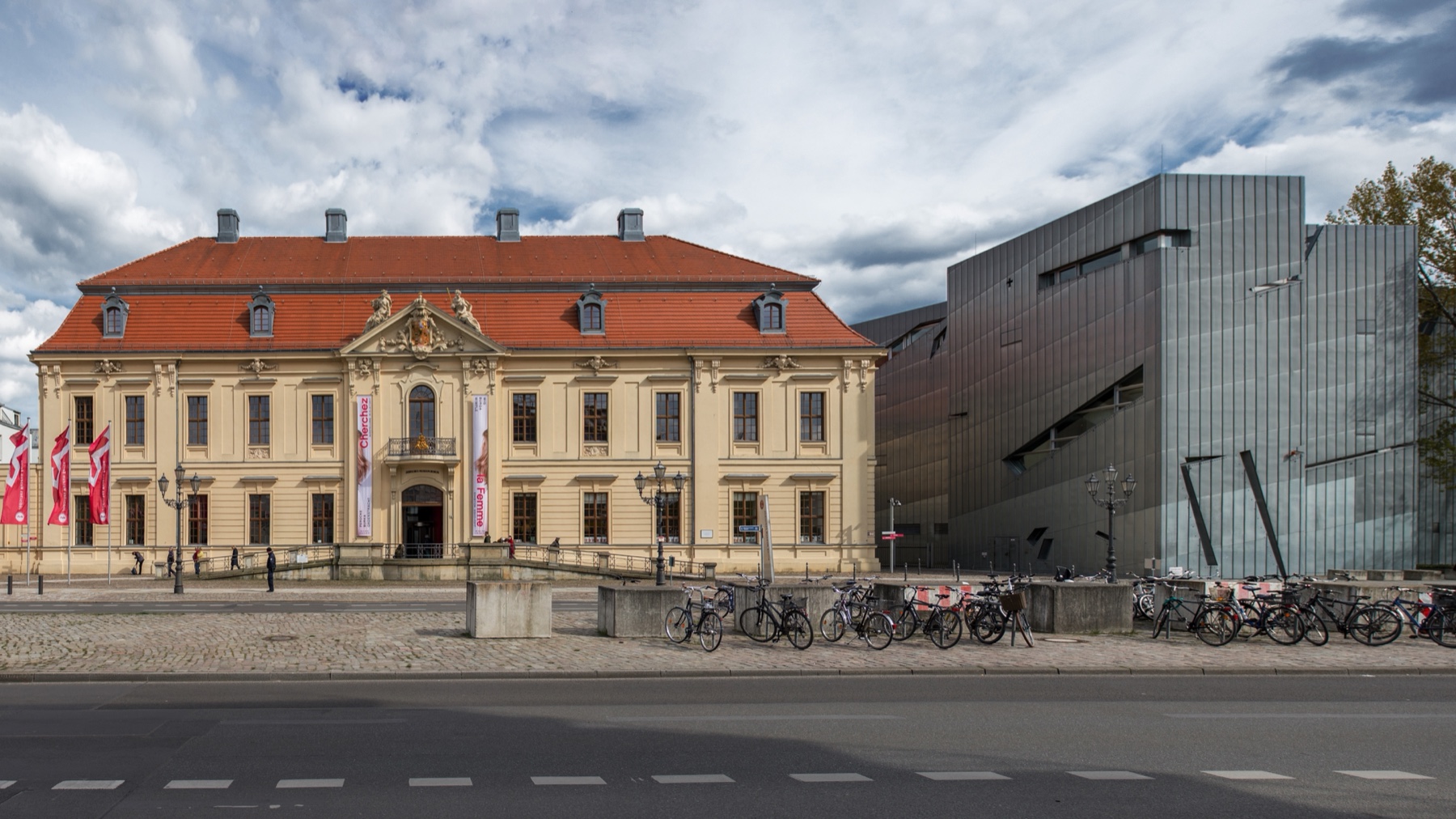
Jewish Museum Berlin with the Baroque Kollegienhaus and the zinc-clad Libeskind building
A visit measured in attention

Jewish Museum Visit Sequence

Set the time you really have. The path below protects the building's three axes, gives the 1,700-year core exhibition the longest block, and leaves room to pause when the day allows it.

Recommended starting point: 2 hours 30 minutes to 3 hours
Tue to Sun, 10:00 to 18:00 Last entry is 17:00. A deep visit needs an earlier arrival.
Core exhibition: free A timed slot is recommended. Walk-ins are also possible.
Security comes first Checks are mandatory. Large bags belong in the cloakroom.
Build the visit around the clock

How much attention can you give it?

2h 45m
Where your time goes
20m Entry
50m Axes
80m Core
15m Pause
One connected path

Follow the building before the checklist

The minute windows update with the rail above. Treat them as turnaround points, not a demand to rush sensitive spaces.

  1. The Jewish Museum Berlin ensemble on Lindenstrasse
    The visit starts in the former Collegienhaus before the route enters the Libeskind building.
    Essential buffer 20 minutes

    Arrive with buffer, not speed

    Have your booking confirmation ready, clear security, and use the cloakroom before trying to orient yourself. Starting calm is more useful than winning five minutes here.

    Mandatory: security screening applies to every visitor. Large bags must go to the cloakroom.
    Start +0m, move on by +20m
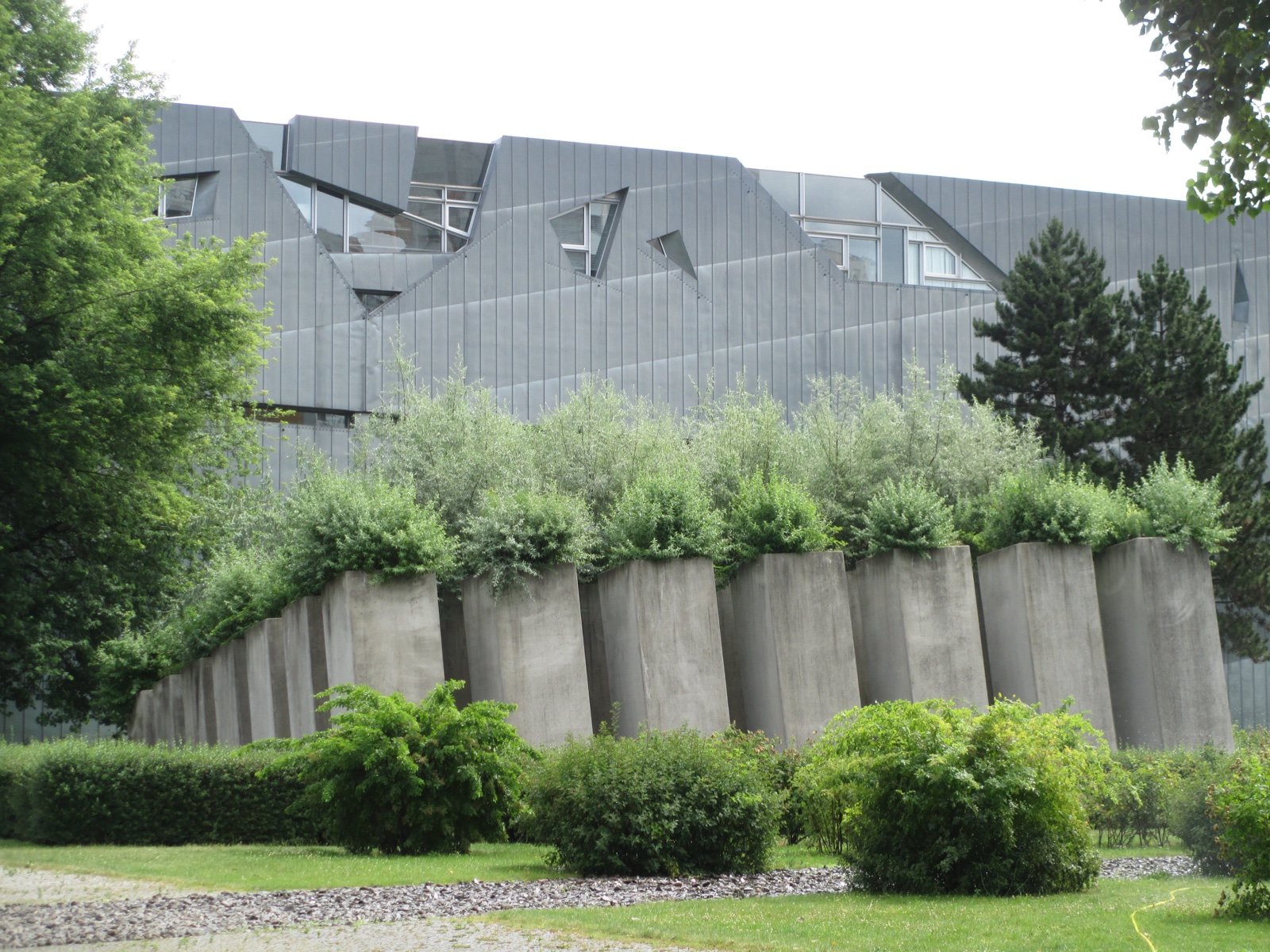
  2. Concrete columns in the Garden of Exile at the Jewish Museum Berlin Garden of Exile
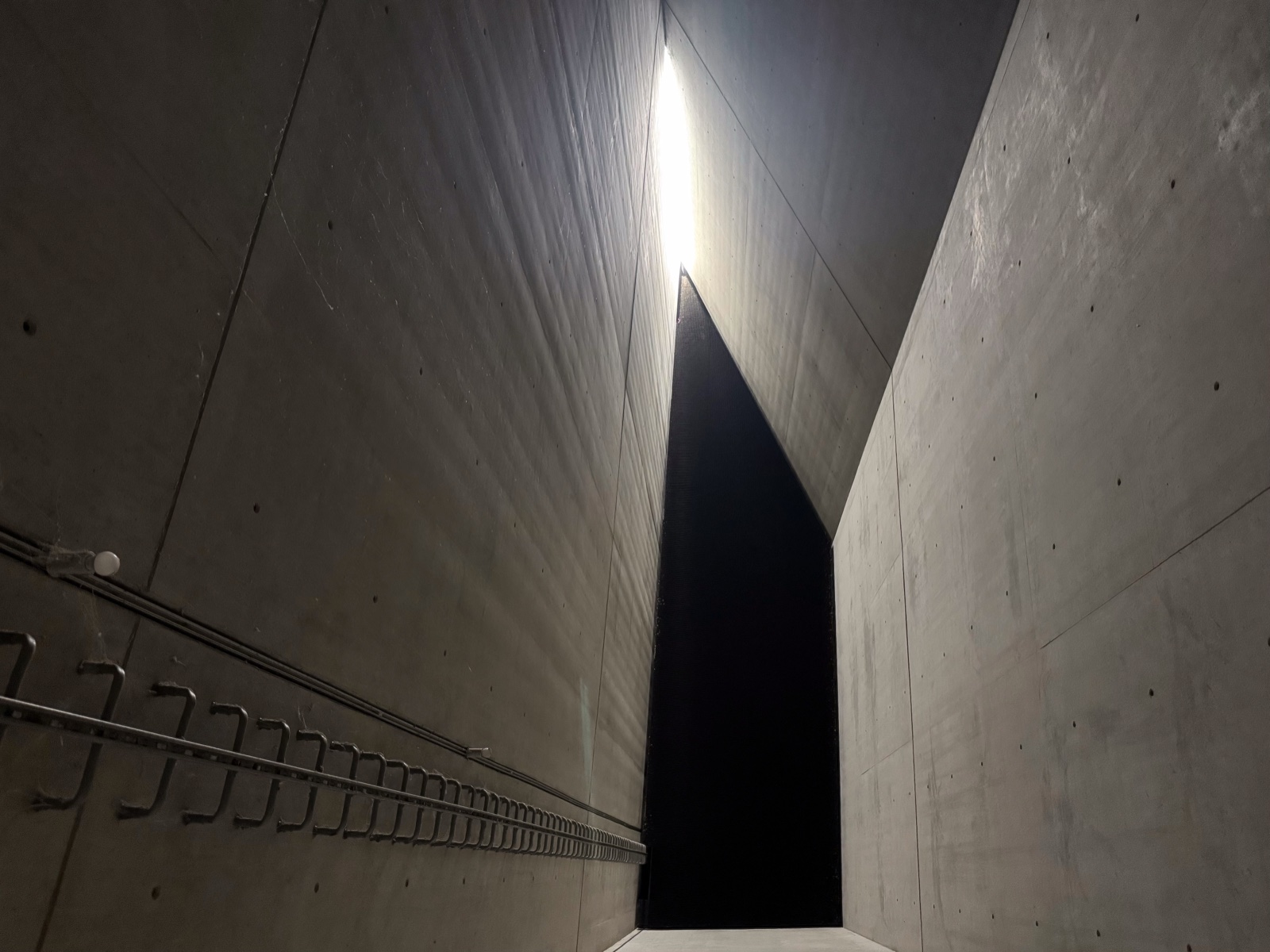
    Light entering the high concrete Holocaust Tower at the Jewish Museum Berlin Holocaust Tower
    The Garden and Tower are not photo stops. Give each space silence and enough time to register.
    Spatial core 50 minutes

    Read the three axes before chasing exhibits

    Follow the underground axes as one connected argument. Take the Garden of Exile and Holocaust Tower without turning them into boxes to tick, then use the Axis of Continuity to move toward the core exhibition.

    Orientation: the Axis of Exile, Axis of the Holocaust and Axis of Continuity form the underground route. The Axis of Continuity has 82 steps, with lifts available. The Garden of Exile is not wheelchair accessible.
    From +20m to +1h 10m
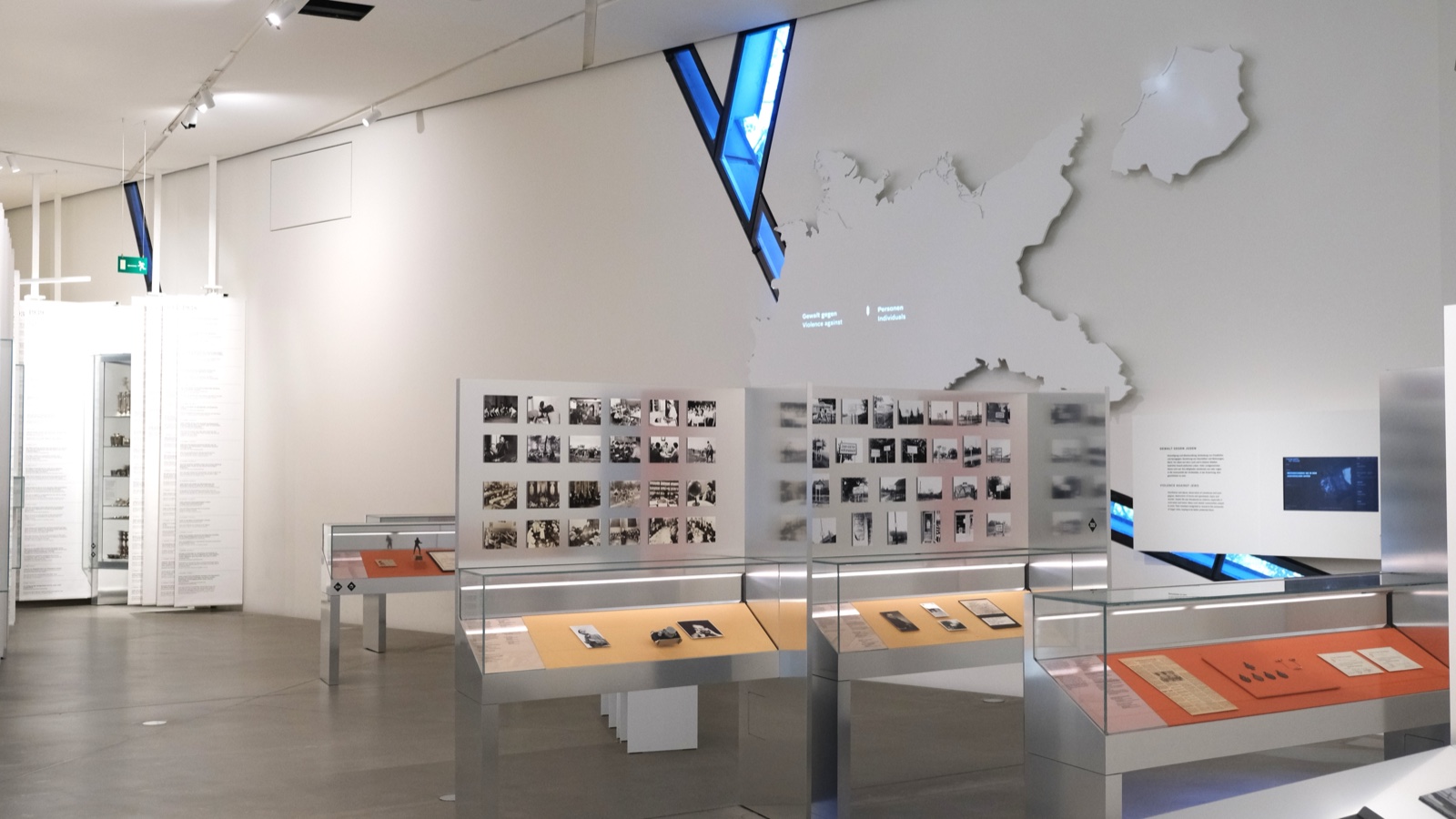
  3. Display cases, wall text and a map in the current Jewish Museum Berlin core exhibition
    The current core exhibition expands the story beyond the building and beyond one period.
    Longest block 80 minutes

    Give the core exhibition the longest block

    Move through a coherent chronological stretch instead of sampling every display. The core exhibition spans 1,700 years of Jewish life in Germany. It is not only an exhibition about the Holocaust.

    Useful frame: protect the breadth of the story. If time tightens, reduce display depth rather than skipping the historical arc.
    From +1h 10m to +2h 30m
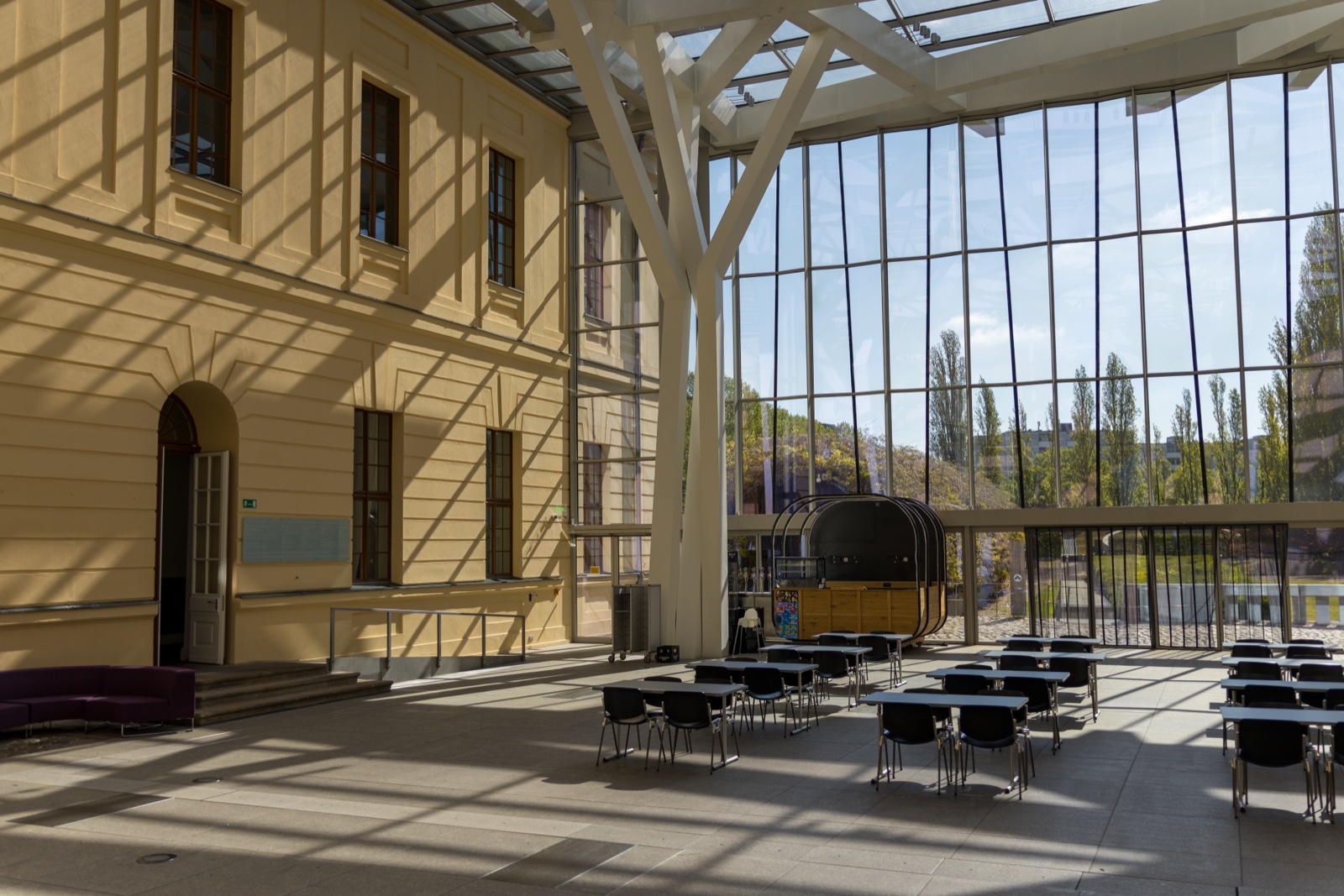
  4. The Glass Courtyard inside the Jewish Museum Berlin
    A final pause helps the building and exhibition settle before the city takes over again.
    Protected pause 15 minutes

    Make room to absorb it

    Use the Glass Courtyard or another calm public area to stop, then look back at how Libeskind's Between the Lines design has shaped the route. This is reflection time, not leftover time.

    Accessibility: public areas are otherwise accessible, with the Garden of Exile as the important exception.
    From +2h 30m to +2h 45m
Before you enter

Keep the practical details simple

  • 01Book a timed slot when possible. Walk-ins are accepted, but a slot removes one uncertainty from the day.
  • 02The core exhibition is free. Temporary exhibitions or special programmes may have separate conditions.
  • 03Pack for security. Keep large bags out of the visit path and expect the cloakroom before the exhibition.

Check the official visitor page on the day

Opening conditions, timed slots and temporary closures can change. The museum's own site is the final source. For broader planning, pair this sequence with BerlinWalk's free-museum and museum-bag guides.

Time allocations are planning guidance, not an instruction to rush difficult material.